

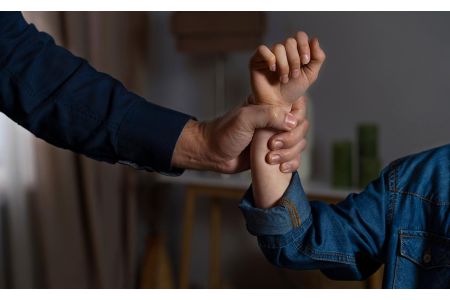
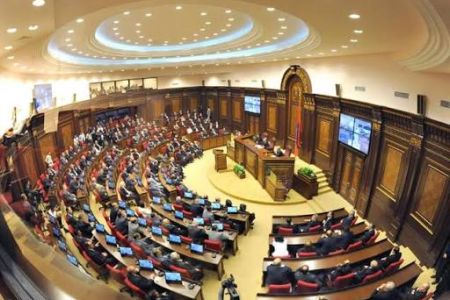
ArmInfo. In Armenia, penalties for domestic violence will be toughened, and protection mechanisms for victims will be strengthened. At the plenary session of the National Assembly of the Republic of Armenia on October 28, amendments to the law "On the Prevention of Domestic and Domestic Violence and the Protection of Persons Subjected to Domestic and Domestic Violence" and a package of related documents will be discussed in the first reading. The initiative was sponsored by MPs from the ruling Civil Contract faction, Zaruhi Batoyan, Sona Ghazaryan, and Tsovinar Vardanyan.
According to Zaruhi Batoyan, the proposed amendments aim to increase the effectiveness of protection for victims of domestic and domestic violence and ensure a more interest-oriented approach to the investigation of such crimes. The package proposes toughening criminal liability for domestic violence. In particular, it is proposed to separate crimes against the person committed within the family and domestic relationships into separate chapters in the Criminal Code of Armenia, providing for more severe punishments. It is planned to expand the scope of the crime related to the use of physical force by a family member to include repeated instances of violence over a certain period. Changes will also affect the scope of the crime related to psychological pressure: it is proposed to include threats to destroy or damage property. Furthermore, it is planned to clarify the concepts of social isolation, control, and domestic violence in the Criminal Code. The bills also envisage eliminating the possibility of exemption from criminal liability based on active repentance in cases of family and domestic violence. The authors of the legislative initiative also proposed introducing new mechanisms to protect victims. One of the key changes will be the abolition of warnings as a type of protective measure. It does not require the implementation of effective and efficient protective measures or the application of restrictions, but merely a warning from a police officer to the perpetrator of violence.
Instead of a warning, it is proposed to introduce a mechanism for the preventive registration of perpetrators of violence to ensure they remain under the surveillance of law enforcement agencies. According to the draft law, a police officer will be required to submit a report of the suspected crime to the investigative body no later than 12 hours after receiving information about the incident, regardless of whether a decision on emergency intervention has been made. If criminal proceedings for violence are initiated while an emergency intervention or protective order is in effect, the relevant protective measure is proposed to be maintained for up to two months, regardless of the expiration of the initial period. A decision on emergency intervention will also be available in cases where violence has been repeatedly committed against a family member, partner, former family member, or former partner within the past year. Moreover, the absence of a decision on emergency intervention or its failure to enter into force will not prevent an application for a protective order. It is proposed that placement of a victim in a shelter be permitted only if there is a threat to their life or health, if ensuring their safety is impossible by other means. Furthermore, it is planned to require police officers to use portable video recording or photography devices when performing their duties in connection with received reports of violence. It is proposed to make the participation of perpetrators of violence in rehabilitation programs mandatory not only when issuing a protective order, but also when deciding on emergency intervention. A similar requirement is planned to be extended to those convicted of such crimes.
To this end, the Law "On Probation" is proposed to be supplemented with two articles regulating the procedure for fulfilling the obligation to complete a rehabilitation program and liability for failure to do so. Corresponding amendments are also envisaged in the Criminal Executive Code. The legislative package provides for an expanded definition of physical violence against persons with disabilities. It is proposed to include depriving a person of a support or assistive device, damaging or destroying them, as well as limiting the ability to use them. That is, in the case of a person with a disability, this will also be considered physical violence. In addition, if a decision on emergency intervention is made with respect to the sole caregiver of a person with a disability or their personal assistant, a police officer will be obliged to immediately send a copy of the decision and the protocol to the authorized body to ensure alternative care and support. Amendments to the Criminal Procedure Code propose establishing a public procedure for criminal prosecution for crimes containing elements of family and domestic violence. It also provides for a ban on the use of house arrest against the accused if he lives with the victim and during the proceedings it is impossible to ensure their separation by providing the victim with a permanent place of residence elsewhere. Another change concerns the procedure for interrogating victims. It is proposed that in cases of crimes containing elements of domestic violence, the victim will be interrogated only once. A repeat interrogation is permitted if it is necessary to clarify circumstances that became known to the body conducting the proceedings after the first interrogation. According to Batoyan, the amendments to the Law on Probation and the Criminal Executive Code are proposed to enter into force on July 1, 2028.
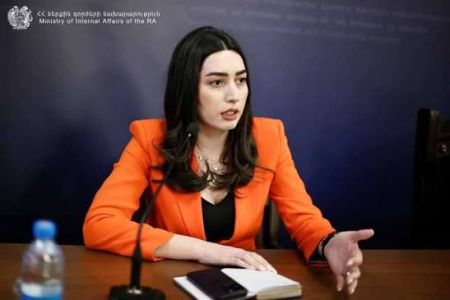
In turn, RA Minister of Internal Affairs Arpine Sargsyan, presenting the government's position on the proposed package, recalled that it was developed at the initiative of Anna Hakobyan, the wife of the RA Prime Minister. From an institutional perspective, the documents address various issues. The Minister expressed hope that their adoption will lead to tangible results in the fight against domestic and domestic violence. The current system did not allow for this fight to be fully implemented. The government does not object to the adoption of the document, having also proposed some additions that were accepted by the authors of the initiative.


























 Expert: Economic pressure on Armenia may be virtually painless for other EAEU members, but not for Armenia itself
 Expert on protests in France: Civilizations fade when society loses a vision of the future
 Turkologist: Azerbaijan is not all-powerful—its vulnerabilities should become part of Armenia’s security strategy
 Opinion: The development of the Amulsar mine near the resort town of Jermuk is the beginning of an environmental disaster in Armenia
 Expert: The arrest of opposition figures in Armenia for social media posts is a systematic attempt to intimidate the public and suppress dissent.
 The participation of Artsakh ensembles in an international festival in Vienna was cancelled following the intervention of several foreign embassies
 Expert: It`s time for Armenia to move away from uncertainty and choose between West and East
 The Armenian Foreign Minister commented on the country`s return to work within the CSTO.
 The Artsakh Public Council expressed outrage at the UN Secretary-General`s behavior
 Lukashenko called for Armenia to assume the CIS presidency in 2029
 Dmitry Medvedev predicted a Ukrainian-like fate for Armenia amid the country`s shift in foreign policy
 Russian Security Council: In Armenia, they want to force Russian asset owners to dispose of their assets
 Zakharova: Russia ready to discuss with Armenia the prospects for expanding military cooperation as part of a review of bilateral ties
 Tevanyan: Armenia, like Ukraine and Moldova, is being drawn into the EU’s global war
 Yerevan City Hall is considering introducing a valet parking system in the city
 Expert: The circus surrounding the “Albanization” of Armenian culture in the presence of foreign ambassadors in occupied Artsakh is genocide
 Political scientist: If Russian-Armenian relations are destroyed, Turkey will take Russia`s place
 Political scientist: The Armenian public is simply obliged to significantly change the entire content of public discourse and struggle
 Cross tattoos are being removed from the skin of Christian prisoners in Azerbaijan by fire, according to a human rights activist.