
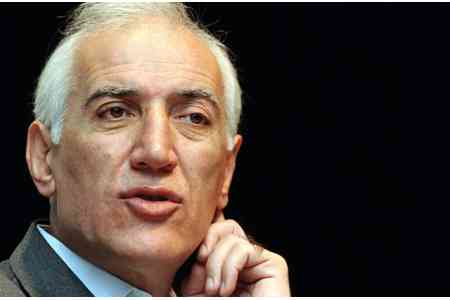
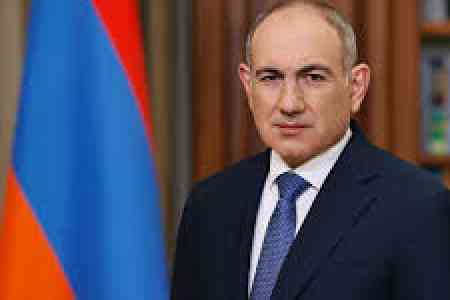
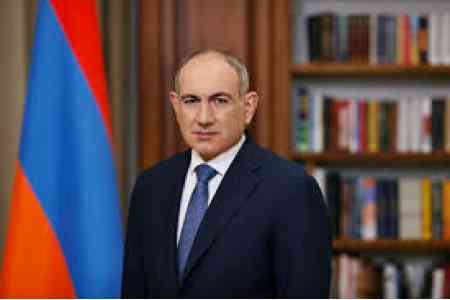
ArmInfo. The 1991 Armenian independence referendum in no way cemented the essence of independence. On the contrary, over the years, it devalued it, disappointed and demoralized many, and distanced them from the aspiration to have an independent, sovereign, and autonomous state. Armenian President Vahagn Khachaturyan delivered this message, published on his Facebook page, at the annual meeting of the heads of Armenia's diplomatic missions.
According to the president, over the years the country has become a "clan-based, corrupt state, whose existence was now conditioned solely by a 'third force.'" According to Khachaturyan, the situation changed after the Velvet Revolution (Nikol Pashinyan's rise to power - ed.), when the current government began to combat such phenomena as corruption and patronage, to liberalize business, and to abolish other privileges.
"Unfortunately, solutions to foreign policy issues that had long been at an impasse, both due to the wishes of the warring parties themselves and the mediators, have become impossible to find. The guiding ideology of the Third Republic was the 'exclusion of a third force': who, when, and why abandoned this – there is still no answer to this question," the Armenian President stated.
Khachaturyan then moved on to the Artsakh issue. In particular, he questioned why the previous authorities never formalized the unification of the Republic of Artsakh with Armenia, and instead "negotiated some kind of 'status' with Azerbaijan for over a quarter of a century, while at the international level they promoted the goal of 'recognition and realization of the right to self-determination.'"
"I share the assessment that, in fact, from 1994 to 2022, Armenia as a state suffered from a 'duality complex': domestically, it acted as a 'plaintiff,' while internationally, it acted as a subject of international law. What happened subsequently required a new approach, a realistic assessment of the situation, and the Prague Summit of 2022 marked the beginning of this. It became the starting point that allowed us to emerge as a fully-fledged sovereign, independent, and predictable country, ready to face reality and, based on that, make, why not, painful, yet rational, pragmatic, and necessary decisions for the state. This is precisely what is confirmed by the difference in the description of foreign policy in the government program for 2021-2026 and in the government program for 2026-2031," the President of Armenia believes.
As a reminder, on August 23, 1990, the Supreme Council adopted the Declaration of Independence of Armenia, which abolished the Armenian SSR and established the independent Republic of Armenia. On September 21, 1991, in a referendum, the majority of the population voted to confirm Armenia's secession from the USSR.
Thus, 94.39% of citizens eligible to participate in the referendum voted "yes" to Armenia's independence. Only 0.46% voted against.













 Political Scientist: Repressions in Armenia aimed at reshaping balance of power, centers of influence, and economic ownership
 Expert: Armenia continues to `peel away` from Russian-led military-political and economic structures
 Opinion: Pashinyan`s five-year government program aims to transform the current administration`s ideological concepts into state policy
 Medvedev: Yerevan will never become an EU member, but it will permanently damage relations with the Eurasian Economic Union, including with Moscow.
 Aram Vardevanyan: Public demands solutions, not apology scandals in Parliament
 Arrested Armenian oligarch on economy and new jobs
  "In Baku, we gave a worthy rebuff to the false claims regarding the past and present of our people" – Former Artsakh Parliament Speaker from Baku captivity
  NA Vice Speaker candidate believes his wife`s salary as director of HayPost is the lowest in the company`s history
 RF Permanent Representative: There is no CSTO-Armenia conflict
 Moscow: NATO seeking to "Pull" Armenia away from CSTO Allies
  Political analyst: Russia intends to determine which "Camp" Armenia will choose through a referendum
 Narek Karapetyan will give up his parliamentary salary in favor of charitable contributions.
 Armenian analyst: Developing relations with Europe and the U.S. must not jeopardize relations with regional powers
 Armenia and France discuss further development of strategic partnership and EU cooperation
  To overcome risks Armenia must reduce domestic escalation - expert
  Zatulin: Pashinyan was eager to get back to Russia because he actually lost the elections
 Human rights activist Ruben Melikyan dismissed from YSU